Learning and playing: educational activities with beanbags (ages 5-6)
patty Beekwilder
Beanbags are perfect for preschoolers and school-aged children who are ready for more of a challenge. They're ideal for developing fine and gross motor skills and learning new skills. They're Montessori-inspired and encourage independent play and playful learning. Let's first take a look at how your child develops between the ages of 5 and 6.
Your child's development between the ages of 5 and 6
Your child is increasingly starting to think about things you can't see, like numbers and quantities, and how they relate to each other. They also show an interest in counting, arithmetic, and letters, and are increasingly playing with others. Furthermore, their fine motor skills are becoming more refined, making throwing, catching, and balancing easier. They enjoy games with rules and are thrilled to be given responsibilities.
Learn to count and build with beanbags
The beanbags are perfect for playful math problems or creating patterns and letters. You can also use them to build towers or play challenging throwing games together. The perfect mix of learning, exercise, and fun!
Beanbag play ideas - beanbag activities for your toddler up to 6 years old

De-stimulating with sensory bean bags
Children learn so much during this stage of life. School days can feel like a lot. Besides stimulating the senses, sensory play also helps your child relax after a busy day. When you stimulate the senses, the brain slows down. This helps a child get out of their head and become aware of their body again. Beanbags are therefore fantastic sensory toys.
Balance games with bean bags
Balance games are a fun way to practice gross motor skills and balance. There are many balance games for preschoolers, such as:
- Stand on one leg and balance a stack of bean bags on your head.
- Sit on the floor and place a beanbag on your shoulders. Now try to stand up without dropping the beanbags.
- Complete a course with a bean bag on your head.

Endless beanbag throwing games
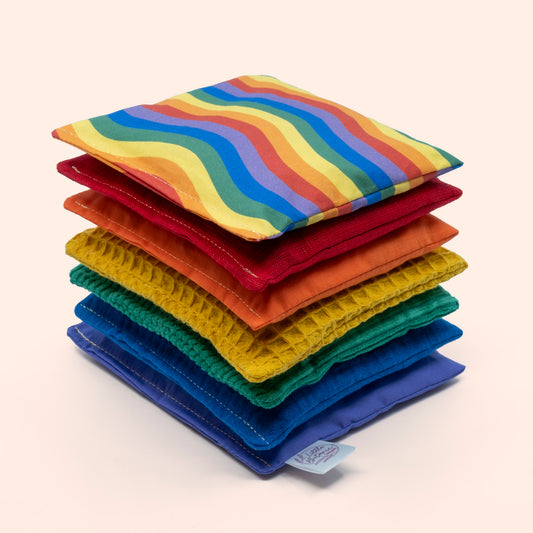
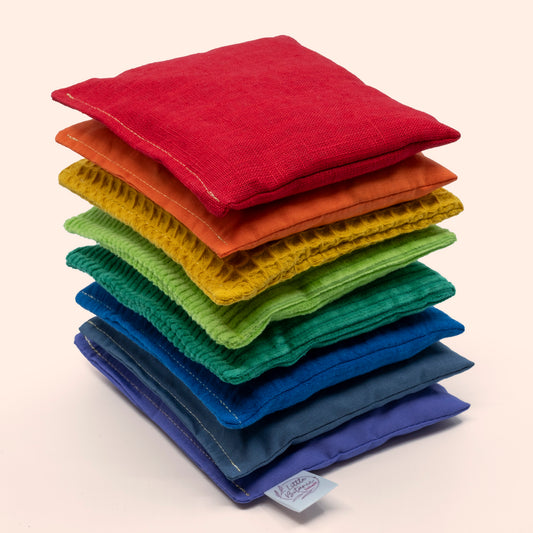
All children love throwing games. And you can make them as difficult as necessary. Place the basket they have to throw into far away. Or have them throw into a basket you hold in your hand and move. And if you have the rainbow beanbags , it's a fun game to name a color, and have them throw only that beanbag.
I've written a blog post about beanbag throwing games , if you need more ideas.
Bean bag hide and seek
Beanbag hide-and-seek remains a hit for years. We've been playing it since my children were 18 months old, and we still do it every rainy holiday. The game is simple: hide the beanbags around the living room and let your child find them! This simple game is a great way to play together, and the whole family can join in. Want to make it extra challenging? Hide them all over the house!

Monkey cages in the living room
Beanbags make great stepping stones in a monkey cage. Build a whole obstacle course or monkey cage if you want to get some exercise but the weather is chilly outside. Use pillows, stacking stones, beanbags, and monkey cages! A playful way to burn off energy and develop gross motor skills.
Another game variation is 'the floor is lava' where your feet are not allowed to touch the floor (the lava).
Jeu de boules with seed bags
Throw a small ball far away and have your child try to get the beanbags as close to the ball as possible. Who will get the closest? And how many steps will that be? You can make this game more interesting and educational by using a measuring tape. How many centimeters away is the beanbag from you?
What is left and right? Learning with beanbags
Beanbags are easy to use as an educational game. From age 5, your child will increasingly understand the difference between left and right. They'll probably still get it mixed up often. Through repetition, your child will learn to remember. So make it a game! Tell your child which way to throw the beanbag, and repeat this over and over.
Would you rather not throw? Then sit on the floor and say, "Put the bean bag to your left." Or, "Put the bean bag to your right."

Beanbags as open-ended play material
Because the bean bags transform into anything your child can imagine, it's perfect Open-ended toys . They're nothing, yet everything at once. So put the beanbags in the play corner and see what your child can come up with.
Instead of structured activities, children create their own rules and stories. Your child can throw, stack, sort, catch, juggle, or even create a balancing game with the beanbags. The possibilities are endless, and each game is unique. The beanbags don't need instructions or explanations. Children play with them naturally!
My daughters love using them as beds for their dolls, as pizza in their play kitchen, a cool pack when they're playing doctor, stepping stones when the floor is lava, and fake cakes that they decorate with glitter stones.

Calculating with bean bags
Learning through play offers your child the opportunity to develop new skills in a fun and exploratory way. With beanbags, you can stimulate your child's math skills.
Have your toddler toss the beanbags and then count how many steps it takes to reach them. Have Mom or Dad do the same—it's exciting to see who needs fewer steps! Or measure the distance with paper hands or everyday objects like pencils. These are all examples of what we call 'natural sizes'. Do you get questions like "Why does Dad need fewer steps?" (after all, it's the same distance), then it's time to introduce standard measurements. Like centimeters or meters.
This is one of the examples of math games with beanbags .
Beanbags for building sturdy huts
Building forts is so much fun! It creates a cozy space for play and role-play. Beanbags are very handy as weights for play cloths or blankets when building forts. This way, the blankets stay in place much better. Handy! The older your child gets, the more complex the forts will become. Let your child experiment, even if the fort collapses again and again. This encourages problem-solving skills.

Beanbags and Stapelstein
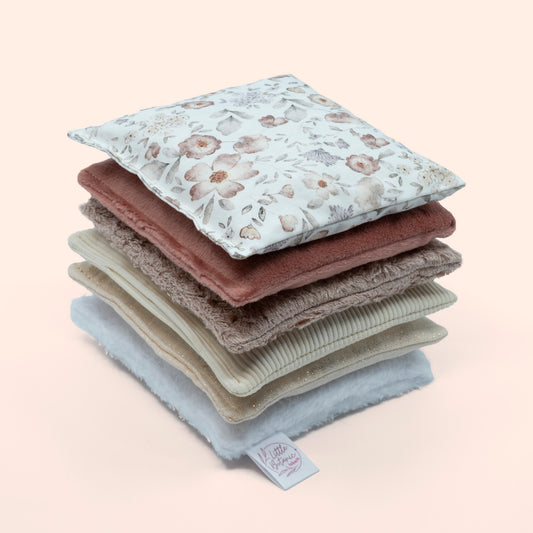
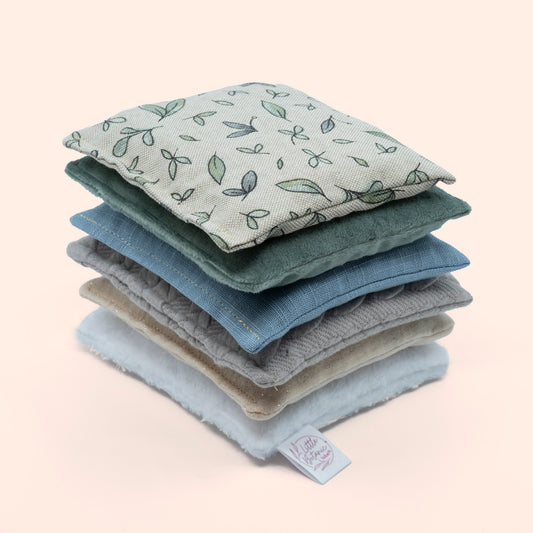
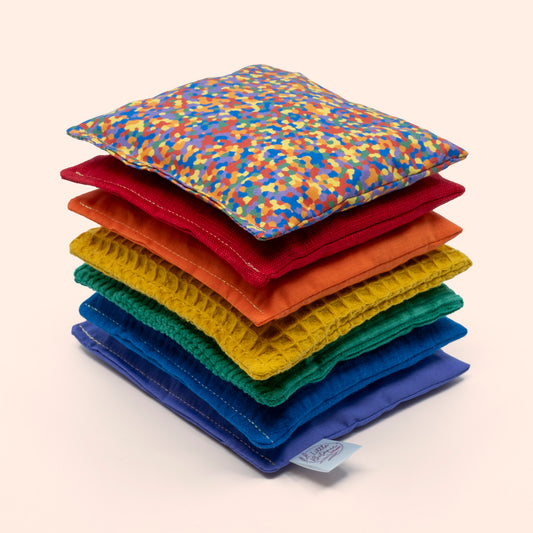
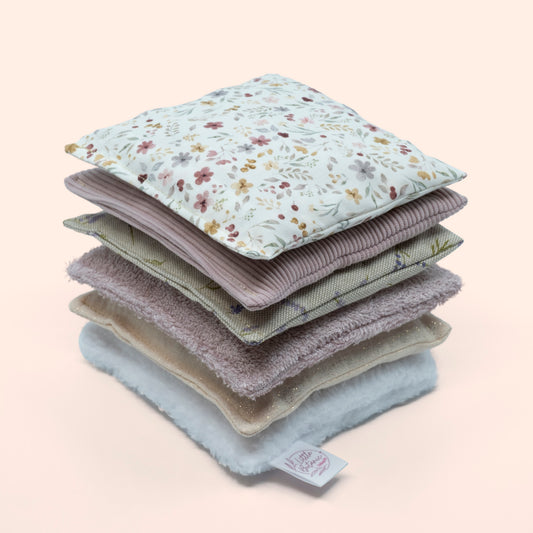
Stapelstein stones and beanbags are a fantastic combination. That's why I've coordinated the pastel and rainbow beanbags with Stapelstein. The play possibilities for your child with Stapelstein and the beanbags are endless.
Throwing games, sorting by color, or a rainbow trail. The Stapelstein beanbags are available individually or as a set. Of course, there are also Stapelstein confetti beanbags to complete your set. Want more inspiration about Stapelstein and the rainbow beanbags? Then order my play guide packed with play ideas featuring Stapelstein and beanbags .

Beanbag educational and open-ended toys for your toddler
Whether you place the beanbags in the play corner as open-ended toys or use them for educational games, beanbags are a very versatile toy. Every child (regardless of age or gender) plays with them, but each in their own way.
Below you'll find more blogs with beanbag play inspiration by age group, so you can play with them endlessly for years to come. Or check out all my open-ended toys .
I think it's important to emphasize that all the ages mentioned for a child developing a particular skill are just an indication. Every child develops at their own pace and in their own way. If your child is a few months earlier or later, that's perfectly fine. Are you concerned about your child's development? Discuss this with a professional.