Imaginative Games: Beanbag Play for Toddlers (3-4 Years)
patty Beekwilder
Let your toddler's imagination run wild with colorful beanbags . Ideal for role-playing, building, and sorting. You can also use beanbags as educational toys to learn colors, shapes, and numbers. This blog post is filled with all sorts of fun games and activities with beanbags for your toddler. But first, let's take a look at the most important developmental aspects of the toddler stage.
Your child's development between the ages of 3 and 4
At this stage of life, your toddler is making huge leaps. Their fine motor skills are becoming increasingly precise, allowing them to stack, balance, and sort things more effectively. Their gross motor skills are also getting a boost: running, jumping, and climbing become increasingly fluid. It's a time when they're curious about how things work and experiment with cause and effect.
Start counting and more fantasy and role play
Toddlers discover patterns and start counting and sorting. The colorful beanbags are perfect for this! Their imagination and role-play also develop further. Beanbags transform into cakes, building blocks, or beds for dolls. Your toddler also wants to play independently, so make sure the toys are in a clear place where they can reach them. This encourages their independence and self-confidence.

Bean Bag Play Ideas - Bean Bag Activities for Your Toddler
Balance games with bean bags
Your little one's balance has now developed to the point where you can make the balancing games more challenging. Think of walking on the beanbags. Standing on one leg on a beanbag. Balancing a single beanbag on your head. Or maybe even a whole stack of beanbags! Can you also balance the beanbags on your arm, hand, or foot?

Beanbag throwing games
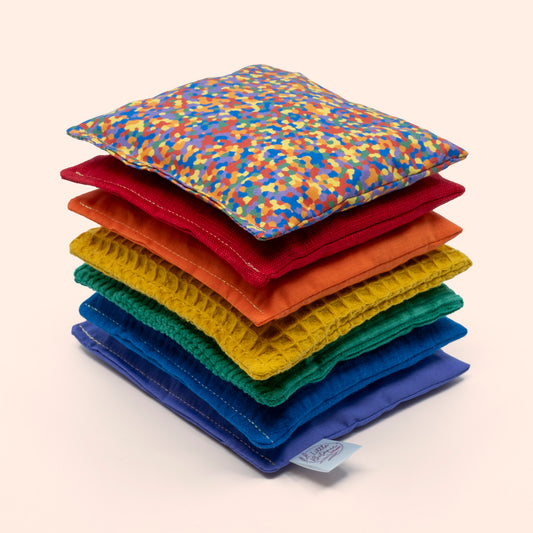
I think throwing games are my kids' favorite. Maybe even the whole family's. You can make them as difficult as you like. Does your toddler have a younger brother or sister? They can join in too. We love playing: who can throw the beanbag the farthest, who can throw it the highest, who can throw the beanbags into the correct stacking stones the fastest, and who can knock over the stack of blocks or cups? Fun fact: my toddler called the confetti beanbags "superrrr beanbags" because they're extra good at throwing.
Is your child also a fanatic climber? Then let them climb up something and throw from a height. With us, they climb onto the sofa and then throw from the armrest into a basket. Throwing from a height requires different skills than throwing from the ground. Need more inspiration? In this blog you can read 10 throwing games with beanbags .

Color sorting with bean bags
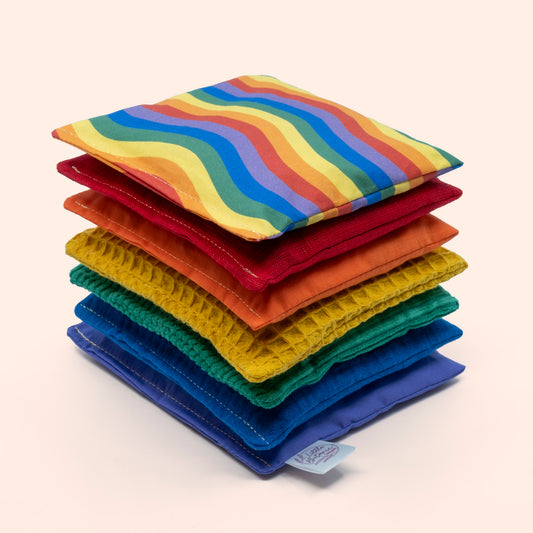
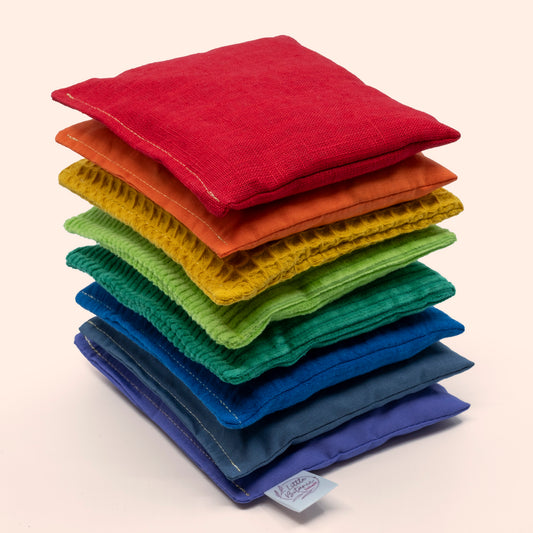
A toddler is still learning to distinguish colors. They can now clearly see the difference between, for example, light blue, blue, and dark blue. Rainbow beanbags are a great toy for encouraging color sorting. For example, set out Stapelstein or another rainbow-colored toy and have your child place the beanbags by the correct color. This is a fantastic way to encourage color sorting. Want to encourage language development as well? Then name the color as soon as your child places the beanbag by the correct color.
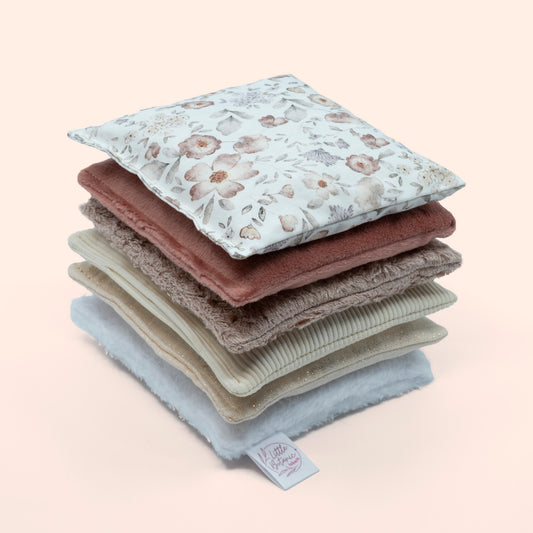
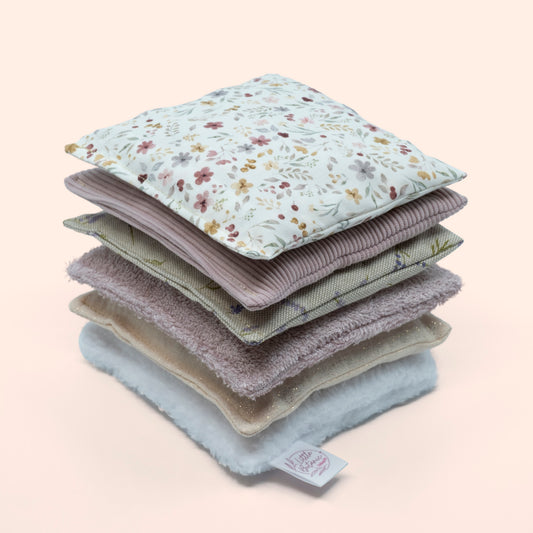
More of a pastel colour fan? Colour sorting is also possible with the Pastel beanbags . Pastel colors have less contrast, but your child is old enough to distinguish between them.

Collecting bean bags and closing a drawstring bag
Drawstring bags are ideal for storing your beanbags when they're not being used. But my children prefer to use them for playtime. Around 3.5 years old, your child will understand that they need to pull the two strings to close the drawstring bag. This is a skill that requires your child to have developed a certain level of understanding and coordination. In my webshop, you'll find beautiful drawstring bags made from eco-cotton .

Toddler gym with bean bags
Does your toddler need some exercise? Try toddler gymnastics together. It sounds complicated, but it's actually quite simple. Set out a row of bean bags to walk on. Each bean bag has a specific activity. Here are some examples of activities; after reading these ideas, you can probably think of 10 more of your own.
- Jump on the next beanbag
- Stand with one leg on the bean bag
- Jump over the bean bag
- Walk around the bean bag
- Do a crazy dance on the beanbag
- Run to the next beanbag
- Crawl to the next bean bag
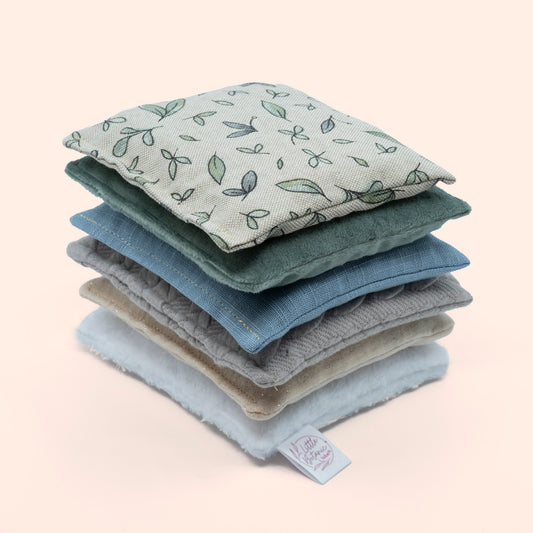
Keep it simple and get moving. A toddler doesn't need complicated instructions. The natural beanbags and the blue beanbags are fun sets for toddlers because of the different textures and the soft teddy beanbag.
Beanbags for building sturdy huts
Building forts is so much fun! It creates a cozy space for play and role-play. Beanbags are very handy as weights for play cloths or blankets when building forts. This way, the blankets stay in place much better. Handy!

Jeu de boules with seed bags
Throw a small ball far away and have your child try to get the beanbags as close to the ball as possible. Who can get the closest? And how many steps is that? Use a measuring tape to make it extra interesting and introduce centimeters.
Making shapes with beanbags
Use the beanbags to create shapes together. Start simple: you make a circle with the beanbags and your child names the shape you've made. Later, your child can create and name their own shapes. You can draw a large shape on paper and then arrange the beanbags in the correct shape. Or you can use the drawn shape as a guide. Keep the shapes simple, like a circle, square, rectangle, and triangle.
Making numbers with beanbags
Besides shapes, you can also make numbers. Use the beanbags to make numbers together. Start simple: you make the number, and your child names it. Later, your child can make and name them themselves. You can draw a large number on paper and then arrange the beanbags on top in the correct shape. Or you can use the paper number as a guide. For this age, it's best to start with three numbers: 1, 2, and 3.
Practicing course and balance
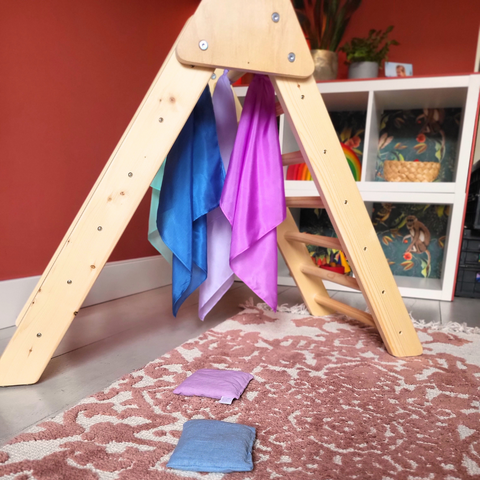
Beanbags also make very useful stepping stones in a course or monkey cage. We often create a course using our wooden climbing frame to crawl under, cushions and beanbags to walk on, and the bench to crawl on.
The filling in a bean bag moves when you step on it, forcing your child to regain their balance. This encourages balance. You can also stimulate their sense of touch by standing on the sensory bags with your foot.

Learning to count with toddlers
Toddlers develop a natural interest in counting. Beanbag toys are a great educational toy that can help your child learn to count. Write a number on a piece of paper and, together with your toddler, add the number of beanbags indicated on the piece of paper. Do this together at first, and you'll notice your child grasping the concept of counting and wanting to do it more independently.
Is your child already four years old? Then this blog post about math with beanbags for toddlers is an interesting read.

Bean bags as open-ended toys
Toddlers develop a richer imagination, and role-play and fantasy play become more prevalent in everyday life. A beanbag can be a pizza in the play kitchen. A bed for the animals, a pillow for themselves, and stepping stones in imaginary water. Because a beanbag is so simple, it can transform into anything. Therefore, it can be anything, and your toddler decides what the beanbag is for. And that can change with every play.
Want to read more about open-ended toys? I'll tell you all about it in the blog post "What are open-ended toys?"

Beanbags and Stapelstein
It seems like a magical combination: Stapelstein stones and beanbags. It's no wonder I coordinated the pastel and rainbow beanbags with Stapelstein. The play possibilities are endless. Throwing games, sorting by color, or a rainbow trail. The Stapelstein beanbags are available individually or as a set. And of course, there are also Stapelstein confetti beanbags . Want more inspiration about Stapelstein and the rainbow beanbags? Then order my play guide packed with play ideas featuring Stapelstein and beanbags .
Beanbags imaginative and educational toys for your toddler
Your toddler's imagination is rich, and you can stimulate this creativity even more by offering open-ended toys like beanbags . The possibilities are endless, and with imagination, these toys come to life. Besides placing beanbags in the play corner as open-ended toys , there are countless educational games for learning shapes and numbers, recognizing colors, and counting.
Curious about how a toddler plays with beanbags? Below you'll find more blogs with play inspiration by age group, so you can play with beanbags endlessly for years to come.
I think it's important to emphasize that all the ages mentioned for a child developing a particular skill are just an indication. Every child develops at their own pace and in their own way. If your child is a few months earlier or later, that's perfectly fine. Are you concerned about your child's development? Discuss this with a professional.